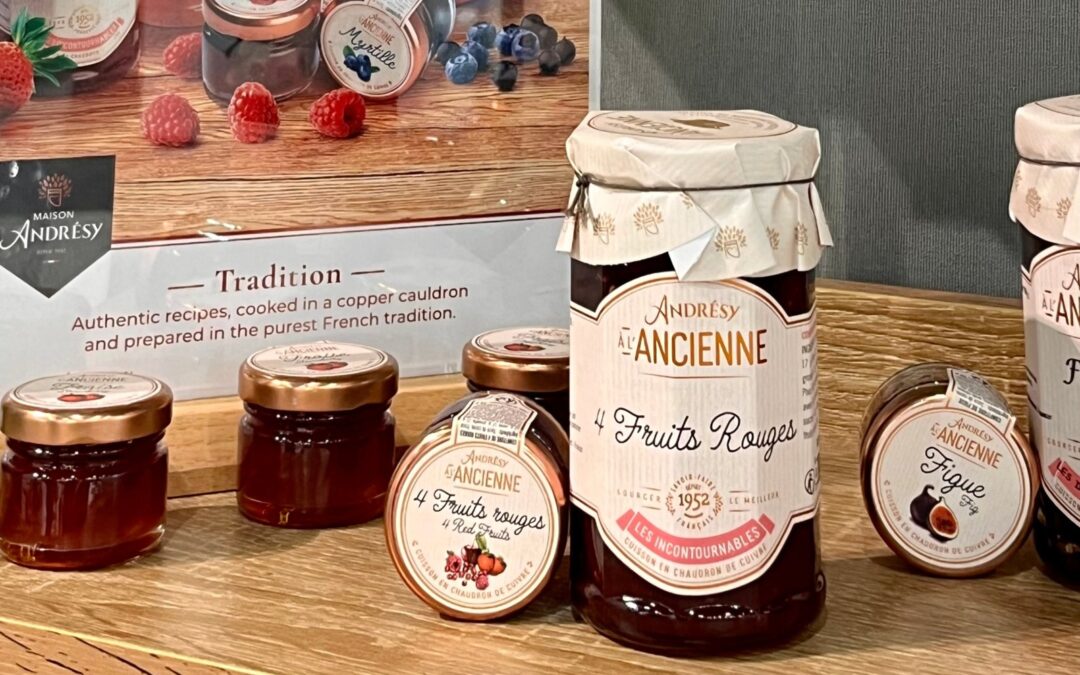
Five days at SIAL Paris 2026, behind a tasting board. Buyers who stopped at a French preserves supplier’s stand asked very little about ranges and a great deal about what a product is for — and about how many suppliers it takes to cover breakfast, the cheese board and room service. One supplier, three moments of the day.
Who comes to a Paris show, and who does not
SIAL draws the world unevenly, and that is worth knowing before you plan a season around it.
Over the five days, the Maison Andrésy stand received buyers from the Middle East, across Europe, from Asia and from the United States, with enquiries from markets we had not anticipated — Palestine among them. Two regions were almost absent. Africa, where we are currently signing distributors in Senegal and Côte d’Ivoire, sent very few visitors. Japan sent one or two.
Neither absence means weak demand. It means those markets are not reached in a Paris aisle.
« Some of our markets simply do not come to Paris. Japan runs through a small number of master importers, and you reach them directly. In West Africa, the buyers we are signing were never going to walk the aisles — you meet them at home. » Hadrien Chaufour, export manager, Maison Andrésy
If you are reading this from one of those markets, that is the practical consequence: the conversation starts by email or on your own ground, not on a stand.
What held buyers at the tasting board
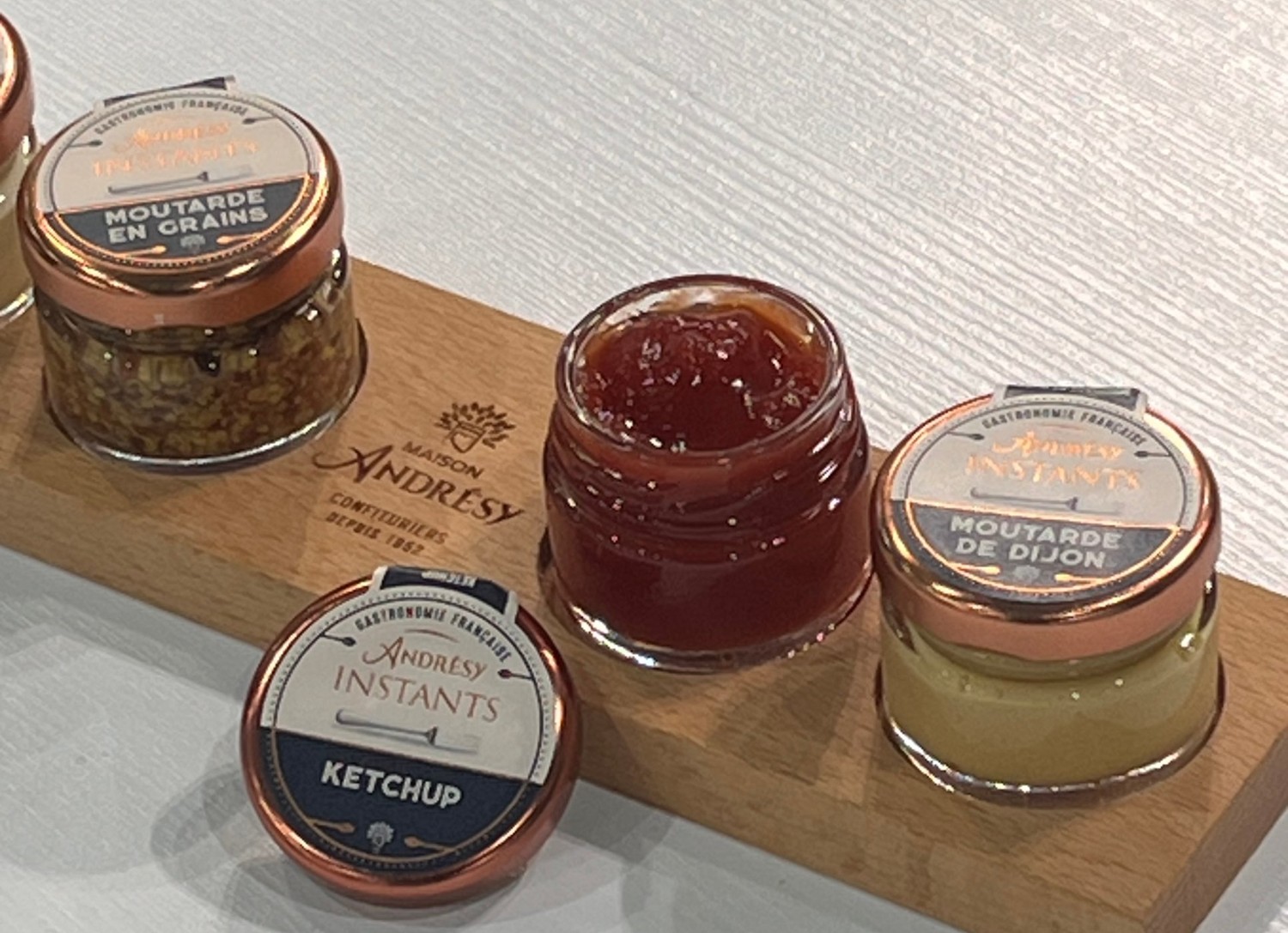
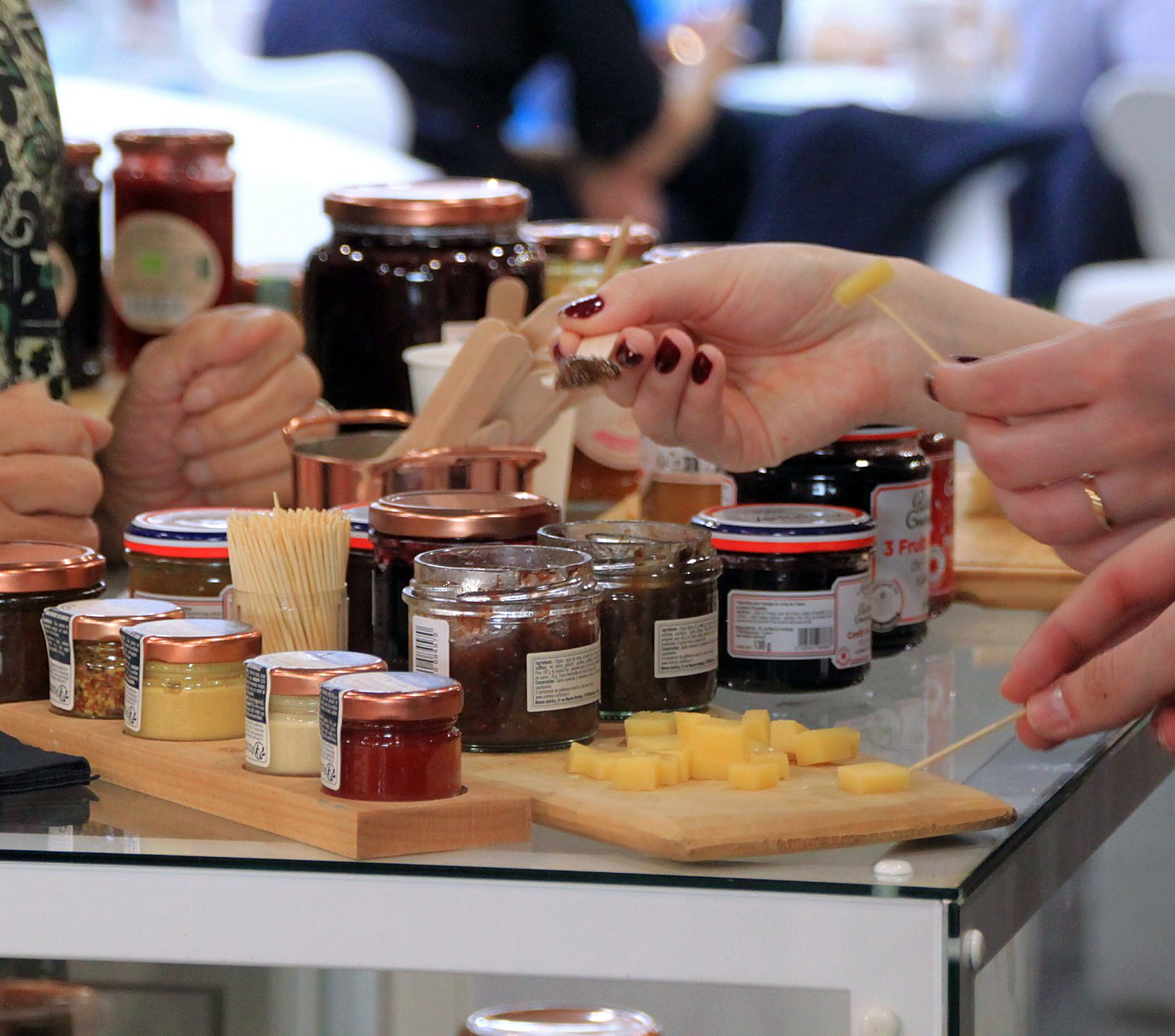
The board carried open jars, bread and wooden spoons — what a preserves maker brings to a show. Beside them sat the cheese-pairing preparations, fig and walnut and black cherry with Espelette pepper, the fig and onion confits, and a green tomato jam.
Those were the ones that stopped people, and they held attention as long as the classic jams did. Buyers who had paused at a French preserves stand left talking about cheese boards, aperitif service and bistro menus
« The signature pairings did the work — a main fruit matched with a second ingredient. The green tomato too. People stopped for those, and once they had stopped we could show them the rest. » Hadrien Chaufour
It is not an isolated signal. SIAL Insights 2026 records the same movement on the consumer side: three people in four say they occasionally buy food they consider a small luxury, for moments of pure pleasure (Kantar). And in Circana’s snacking data, savoury products win the evening and special occasions, where sweet dominates the daytime. Sweet and savoury are not competing categories. They are sharing the day.
Buyers source by occasion, not by range
The catalogues of Maison Andrésy are organised the way its workshops are: by collection. That is convenient on the manufacturing side and considerably less so on the sourcing side.
A buyer is not asking which collection a product belongs to. They are asking what goes on a breakfast tray, what works in room service, what sits beside a cheese course, what will still make sense on a January menu. They think in occasions, and they expect to be answered in that language.
One point worth correcting, because the received version is misleading: this is not the story of the meal disappearing. Kantar’s figures show the opposite in France — only 4% of French consumers say they increasingly replace traditional meals with snacks, against 10% worldwide — and in Europe snacking’s share of foodservice is high but flat. What is happening is cohabitation, not substitution. The same buyer now serves a seated breakfast and a portable format in the same week.
There is a more useful figure in the same chapter for a buyer outside France. Seven people in ten worldwide favour food products that are easy to prepare or save time; in France, only one in two. The pull towards flexible, individual formats is stronger in your market than in ours. A French manufacturer already working in individual portions is therefore ahead of its own domestic demand — which is something you can use, not a detail about us.
Would you rather start from your range than from ours?
Three questions are enough to identify the occasions your range does not yet cover. The result appears immediately, with no sign-up, and the matching selection follows.
One French preserves supplier instead of three: what it saves an importer
Most buyers assembling a French offer end up with several suppliers: one for breakfast preserves, another for savoury condiments, a third for gifting. Each one means its own certification file, its own minimum order quantity, its own lead time, its own container planning, its own invoice to reconcile.
A single manufacturer covering breakfast, the cheese board and room service is not a merchandising convenience. It is one supplier fewer to audit, one set of documents fewer, one shipment fewer to coordinate.
In the same workshop and under the same certification, Maison Andrésy makes :
- jams, traditionals, organics, low sugar, no sugar added, 100% fr’uits
- fruit and onions confits,
- honeys,
- chocolate spreads, traditional or organic
- powdered chocolate, portion or kg
- and savoury condiments — mustards, ketchup, mayonnaise
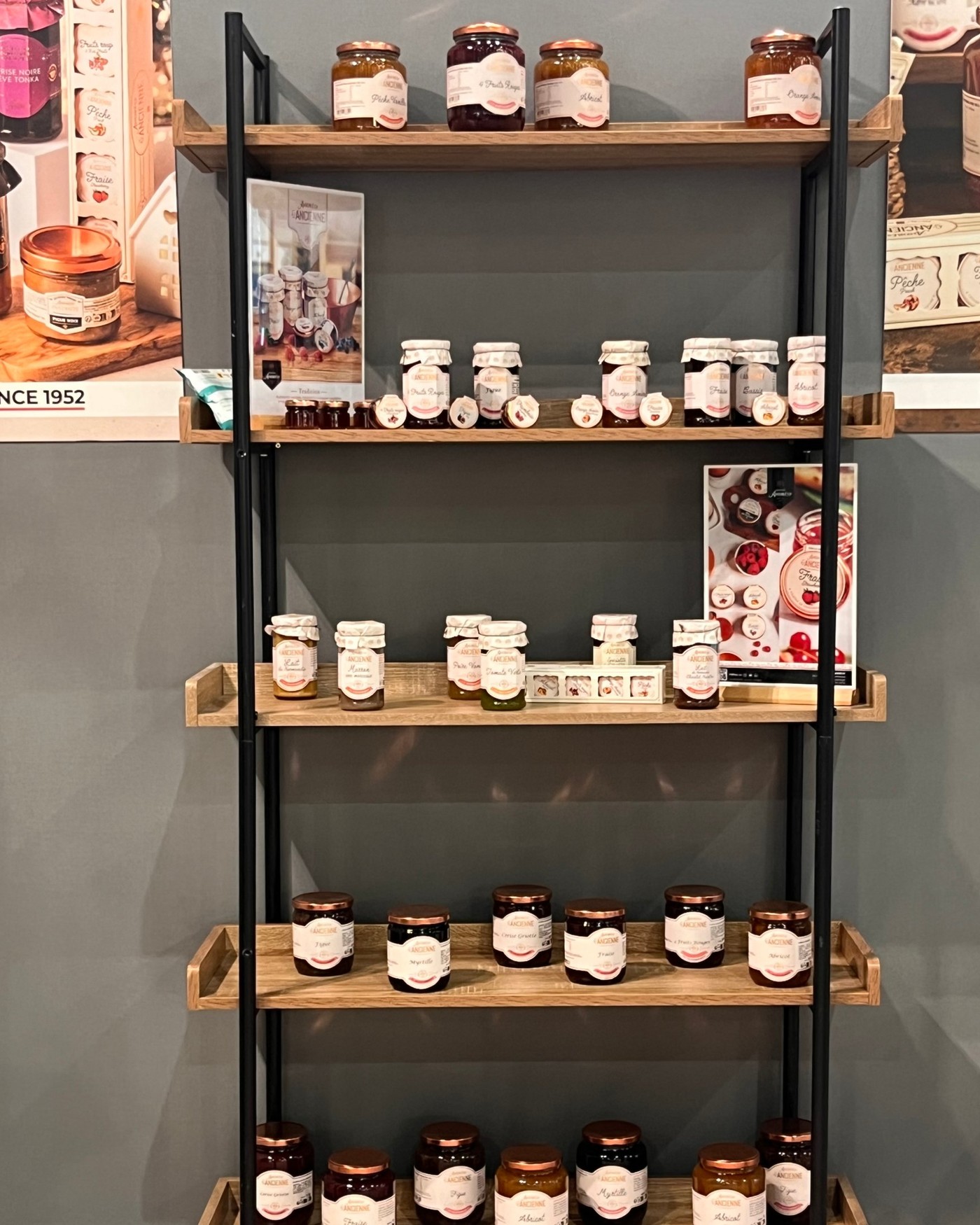
The whole of that offer exists in individual portions for breakfast and room service, and in sharing jars of 270 g, 500 g and 1 kg for buffet and kitchen use.
Ribbed jars are available where shelf presence matters.
For retail buyers, the same single-supplier logic answers a different objection.
« A full shelf is not short of a seventh strawberry jam. What a shop is missing is the reference that does not look like the other six. Six plus one — that is the one that opens the account, and the rest follows. » Hadrien Chaufour
If your business runs on private label, the case is stronger still. Retailer brands now hold 42.4% of the European grocery market, up half a point in a year, and they account for 54% of value growth and 87% of unit sales growth in European consumer goods (Circana, EU6, 12 months to end February 2026). Growth in this market is being delivered under retailers’ own names — which means the question for a manufacturer is no longer whether to produce under someone else’s brand, but whether it can do so across several occasions at once. Maison Andrésy can: the same workshop, the same certification, our label or yours.
What stands up to checking
At an international show, tradition is claimed by most premium producers. An argument shared that widely separates no one.
The data says the same thing more bluntly.
- Naturalness as an innovation claim is in sharp decline — down 6.5 points worldwide and 12.5 points in France (ProtéinesXTC).
- Attention to provenance, on the other hand, is rising outside France: 72% of consumers worldwide say they are increasingly attentive to where a product comes from, up two points, while the French figure has fallen three points to 67% (Kantar).
- Origin still works as what SIAL Insights calls a taste passport — 95% of respondents say they are interested in at least one foreign cuisine. French origin is an asset in your market. The adjectives that usually accompany it are not.
What distinguishes is what can be verified.
At Maison Andrésy that means :
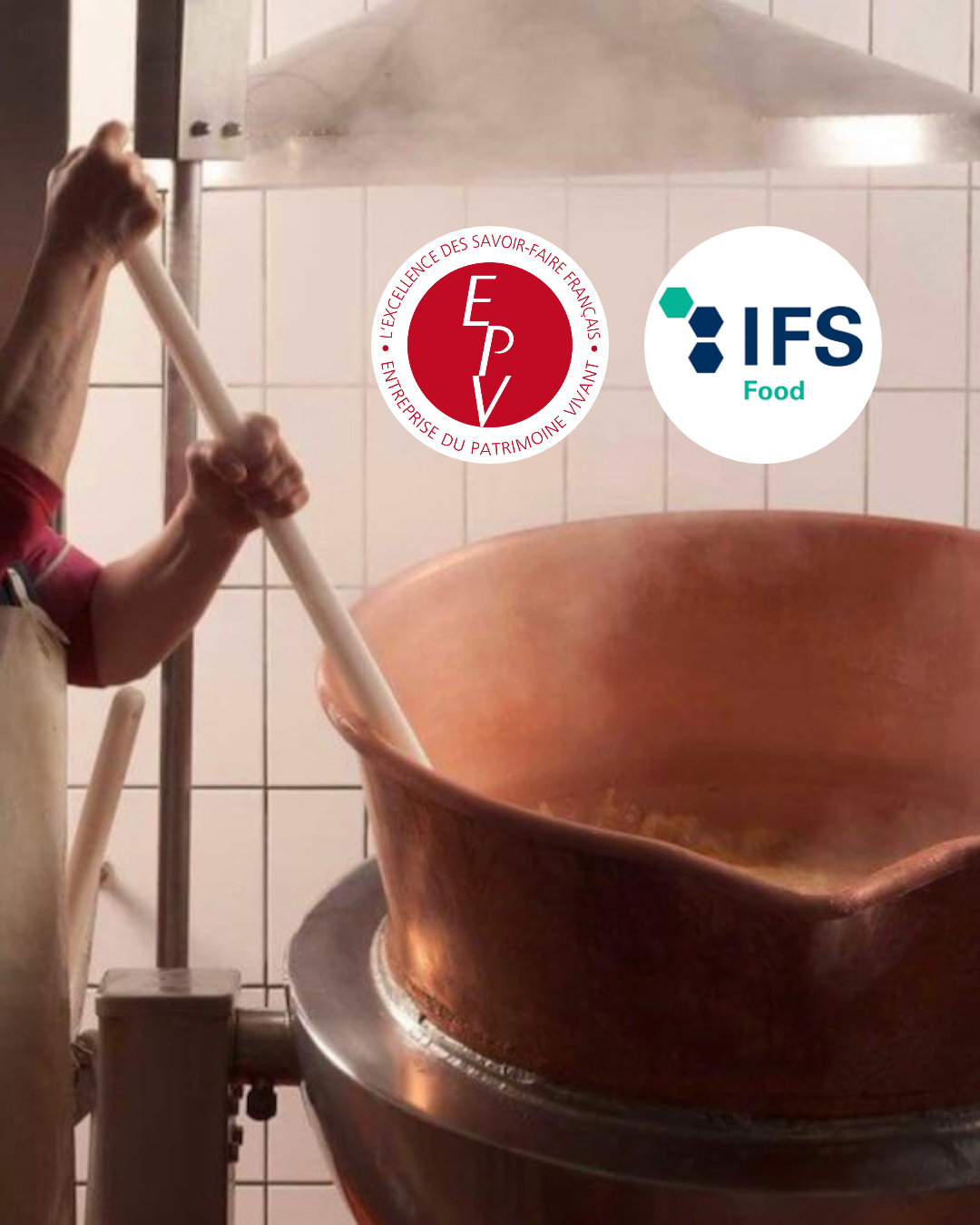
- copper cauldron cooking in small batches, which changes the texture of the fruit and shows in the jar;
- the Entreprise du Patrimoine Vivant distinction, awarded by the French state and not purchasable;
- IFS Food certification, with every batch traced from grower to final consumer; and fruit sourced mainly in France.
Emily Mayer of Circana puts the commercial version of this well:
« Budget constraint does not lower expectations, it makes trade-offs more sophisticated. Growth now depends on the ability to deliver a clear, immediately perceptible benefit at the right price. »
A clear and immediately perceptible benefit is, precisely, a product attached to a defined use — and backed by something checkable.
An experienced buyer does not ask whether you are traditional. They ask what you can show them.
Key points
- SIAL draws some markets and not others; Africa and Japan are reached directly rather than in a Paris aisle.
- What stopped buyers at the board were the savoury and the singular recipes, not the classics.
- Buyers source by occasion — breakfast tray, cheese board, room service — and expect to be answered in that language.
- Appointing one French preserves supplier for three occasions removes a certification file, a minimum order quantity and a shipment, not just a line on a merchandising plan.
- Tradition is claimed by most premium producers; what separates them is what a buyer can verify.
Frequently asked questions
How do I choose a French preserves supplier for a hotel or restaurant group?
Start from the occasions you serve rather than from catalogue depth: what goes on the breakfast table, what accompanies the savoury buffet, what leaves on a room service tray, what sits beside the cheese course. Ask each supplier to answer in those terms. A supplier who can only answer by collection leaves the matching work to you.
Can one supplier cover breakfast, the cheese board and room service?
Yes, where the manufacturer makes both sweet and savoury. Maison Andrésy produces jams, fruit confits, honey, chocolate spread, powdered chocolate and savoury condiments — mustards, ketchup, mayonnaise — in one workshop and under one certification, in individual portions and in sharing jars of 270 g, 500 g and 1 kg. For an importer that means one certification file, one minimum order quantity and one shipment instead of three.
Are individual portion preserves available for hotel breakfast service?
Yes. The Maison Andrésy range exists in individual portions, for in-room trays and for buffet service. The sealed individual portion answers two needs at once: individual service in the room, and the maintenance of quality and hygiene when service takes place in the dining room.
What minimum order quantity applies with a French preserves manufacturer?
It depends on the recipe, the format, and whether the jar carries the manufacturer's label or your own. Maison Andrésy sets a minimum order quantity per project rather than publishing a single figure — ask for it at the same time as the price, because the two move together.
Can a French preserves manufacturer produce under private label?
Yes. At Maison Andrésy the recipe, the format and the label are defined together, produced in the same workshop and under the same certification as the house's own brand, with a minimum order quantity specific to each project.
What certifications should I ask a French preserves supplier for?
IFS Food is the baseline for export, with batch traceability from grower to final consumer. Maison Andrésy is IFS Food certified and holds the Entreprise du Patrimoine Vivant distinction, awarded by the French state and not purchasable. Beyond certificates, ask what can be checked: where the fruit comes from, how it is cooked, and whether a batch can be traced back.
Building a French preserves range?
Tell us the occasion you need to serve — breakfast, cheese board, room service, gifting — and Maison Andrésy will propose the references that answer it, with formats and minimum order quantities.
Sources
- SIAL Insights 2026, the SIAL Paris trends report produced with Kantar Food 360, Circana and ProtéinesXTC — insights 3, 4, 7 and 8.
- Circana, EU6 private label data, 12 months to end February 2026.