Zoom on the sugar for jam in the manufacture of our jams Maison Andrésy!
21
July 2022
The jam is a simple product in appearance with reassuring basic ingredients: fruits and sugar!
Many of you have pertinent questions about the sugar present in jams, fruit preparations or compotes.
Which jam sugar is used by professional jam makers?
What does the legislation say about sugar for jam?
What choices have Maison Andrésy made for jam sugar?
Thanks to the R&D department of the French jam expert, you will understand everything about this major ingredient of our artisanal jams!
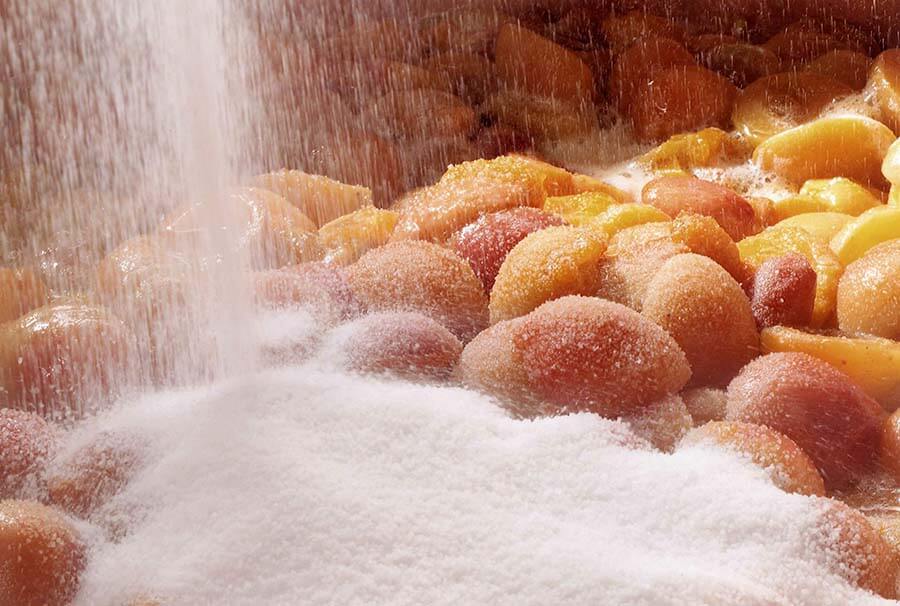
What kind of sugar for jam is used for our artisanal jams?
The sugar for jam par excellence is without question the cane sugar.
It is linked to the exploitation of the “sugar islands”: Saint-Domingue, Martinique, and Guadeloupe, by France which made it, in the XVIIIth century, the 1st world producer.
Then, it is beet sugar which becomes the most common jam sugar, in France, at the end of 1811, following the discovery of the French chemist Jean-Baptiste Quéruel who finds how to extract sugar industrially from beet, and the English blockade which cuts Europe from its sugar islands.
Today, you can find honey, birch sugar (also called xylitol), organic sugar for jam and many other sweetening products!
But, the sugar for jam is standardized by the French and European legislations.
To have the right to the name “jam”, it is necessary to respect the % of sugar contained in the jam but also the type of sugar: there is a list of authorized sugars!
Did you know that?
Your expert jam maker has been using cane sugar for 3 generations.
Initially red in color, it is cleaned of impurities from the cane through a refining cycle and processed to obtain semi-refined or refined sugar.
Maison Andrésy uses it to make its French jam recipes.

At what point does the sugar for jam come into play in the artisanal production process?
The pectin, the sugar naturally present in fruit, is released during cooking. It forms a gel by associating with the sugar for jam that we added in your preparation: it is what gives the jam.
Without jam sugar, your jam may not set and remain in a liquid state: like a tomato sauce!
Moreover, sugar has a role to play in the fight against the proliferation of microbes: it absorbs all the water contained in the fruit.
Therefore, the presence of sugar is essential for your jam to take shape and prevent it from going mouldy. However, this requires a high concentration of sugar, ranging from 50% to 70%.
Always, the sugar for jam is mixed, during the cooking, with the fruits to preserve them.
The steam cooking in a copper basin allows this delicate symbiosis and essential for our good jams. Learn more about the benefits of the copper pot by reading this article.
You have other questions about the sugar for jam or the artisanal manufacture of our jams?
Our experts are at your disposal!
Ask all your questions and choose the best French jam for your customers!
CONTACT OUR EXPERTS
Hotel F and B Solutions in Dubai: Maison Andrésy at CRAVE, the must-attend event for Middle East hospitality
What if you could finally find concrete solutions to your most pressing F&B challenges? At CRAVE Dubai, hosted by our import-distributor partner Chef Middle East, Maison Andrésy showcases its premium individual portions: a French artisanal offering crafted...
Why sourcing authentic imported jam for premium natural grocery chains in the USA and Canada?
FOOD In a constantly evolving North American market, where consumers are increasingly focused on origin, quality, and traceability, premium natural grocery chains like Whole Foods Market, Trader Joe's, Sprouts, Costco, and Metro Canada face a growing challenge:...
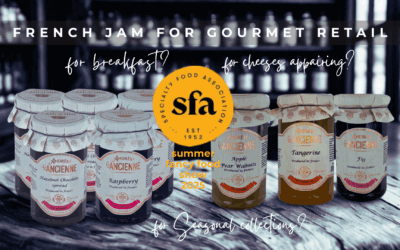
How French Jam for Gourmet Retail Is Making Its Mark in the U.S. and Canada at Fancy Food Show
Why French Jam for Gourmet Retail Is Captivating High-End Aisles ? In 2025, one of the leading trends in premium retail is the return to authenticity, making French jam for gourmet retail a category to watch. Artisan products, rich in history and identity, resonate...